Łukasiewicz – PIAP plays a key role in the new European iMUGS2 project developing interoperable unmanned ground systems

iMUGS2 is of strategic relevance for Europe’s security. It addresses the growing needs of EU Member States for modern, resilient and collaborative unmanned systems

The Łukasiewicz – PIAP Institute is one of the key partners in the European consortium implementing the iMUGS2 project, which aims to deliver a new generation of interoperable unmanned ground systems. Selected by the European Commission for funding under the European Defence Fund (EDF), the project brings together 29 partners from 15 EU Member States.

iMUGS2 builds on the results of the initial iMUGS project and focuses
on strengthening European capabilities in robotics, autonomy, and advanced systems integration. Its objective is to develop a scalable, cyber-secure
and interoperable system-of-systems architecture encompassing both unmanned and manned platforms. The project contributes directly to enhancing European technological sovereignty in AI-enabled autonomous functions, communications, command and control (C2), as well as multi-domain integration.
Strategic importance for European defence

iMUGS2 is of strategic relevance for Europe’s security. It addresses the growing needs of EU Member States for modern, resilient and collaborative unmanned systems. In the context of dynamic geopolitical developments and increasing pressure on defence capabilities, the project supports the development
of common European standards for unmanned ground systems — improving interoperability among armed forces, enabling more effective cooperation
in international missions, and accelerating the deployment of next-generation technologies on the battlefield.

Through iMUGS2, Europe strengthens its position in the area of autonomous defence systems, developing technologies that may form the backbone of future integrated unmanned formations.

“Cooperating with partners across Europe is instrumental for Łukasiewicz – PIAP in developing our technologies and competences. Projects such as iMUGS2 enable us to pool experience, establish common standards and deliver solutions that significantly enhance the security and innovation of European defence systems,”
Dr. habil. Eng. Piotr Szynkarczyk, Director of Łukasiewicz – PIAP
The iMUGS2 project also aligns with the strategic priorities of the entire Łukasiewicz Research Network, particularly within the domain of “Defence
and Security”.

“Our new strategy focuses resources on key areas where we hold strong specialisation. Cooperation between Network institutes and industry — especially within defence projects — is fundamental for building technological
sovereignty and ensuring real implementation of innovation,”
Dr. Hubert Cichocki, President of the Łukasiewicz Research Network

Key contribution of Łukasiewicz – PIAP

Within the iMUGS2 project, the Łukasiewicz – PIAP Institute is responsible
for several critical tasks enabling operational interoperability and capability development of unmanned systems:

1. Integration of the autonomous PIAP HUNTeR platform into
the European system-of-systems

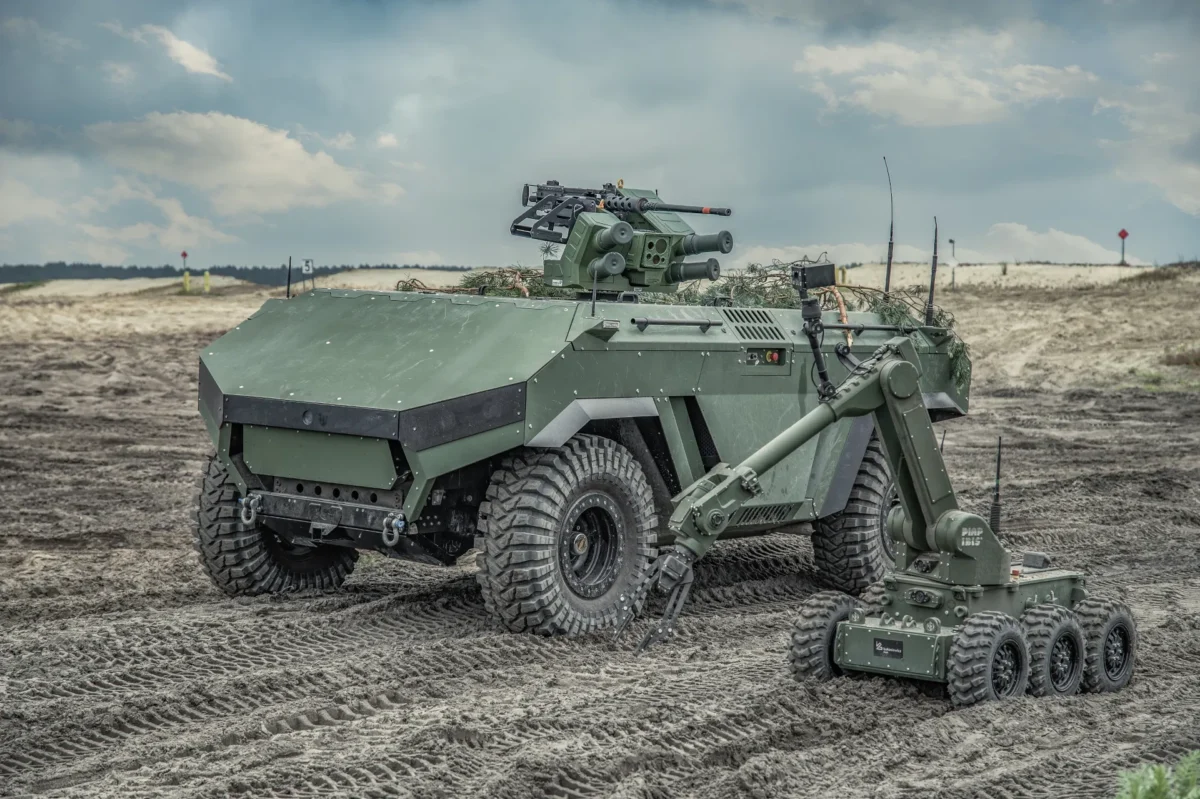
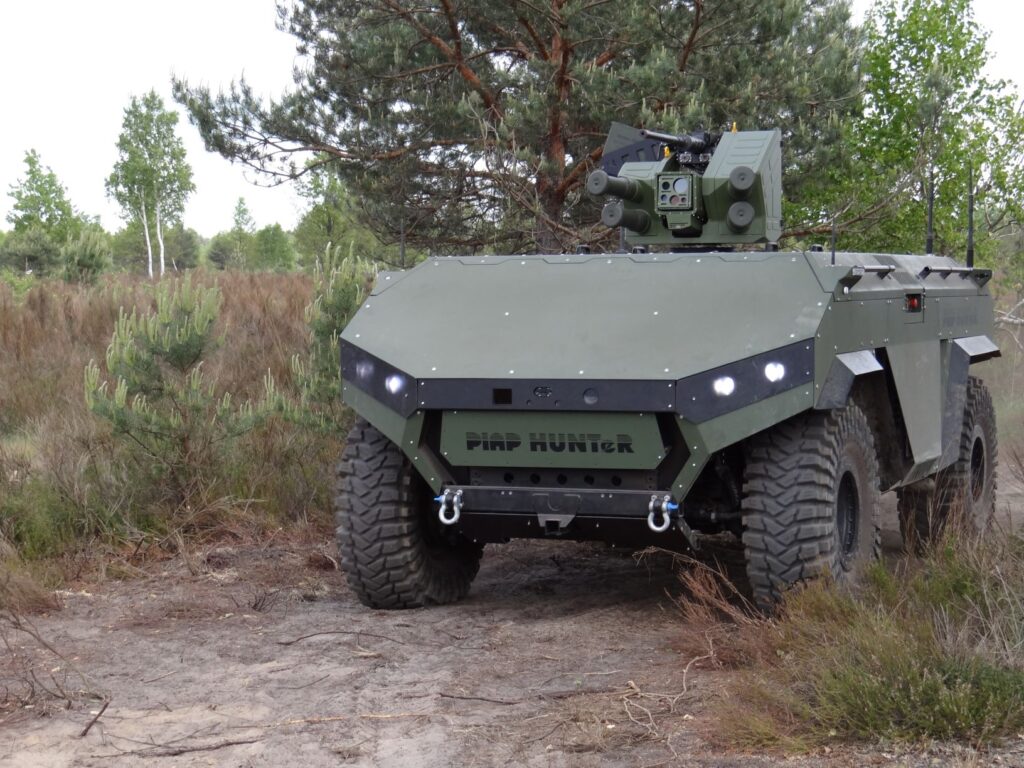
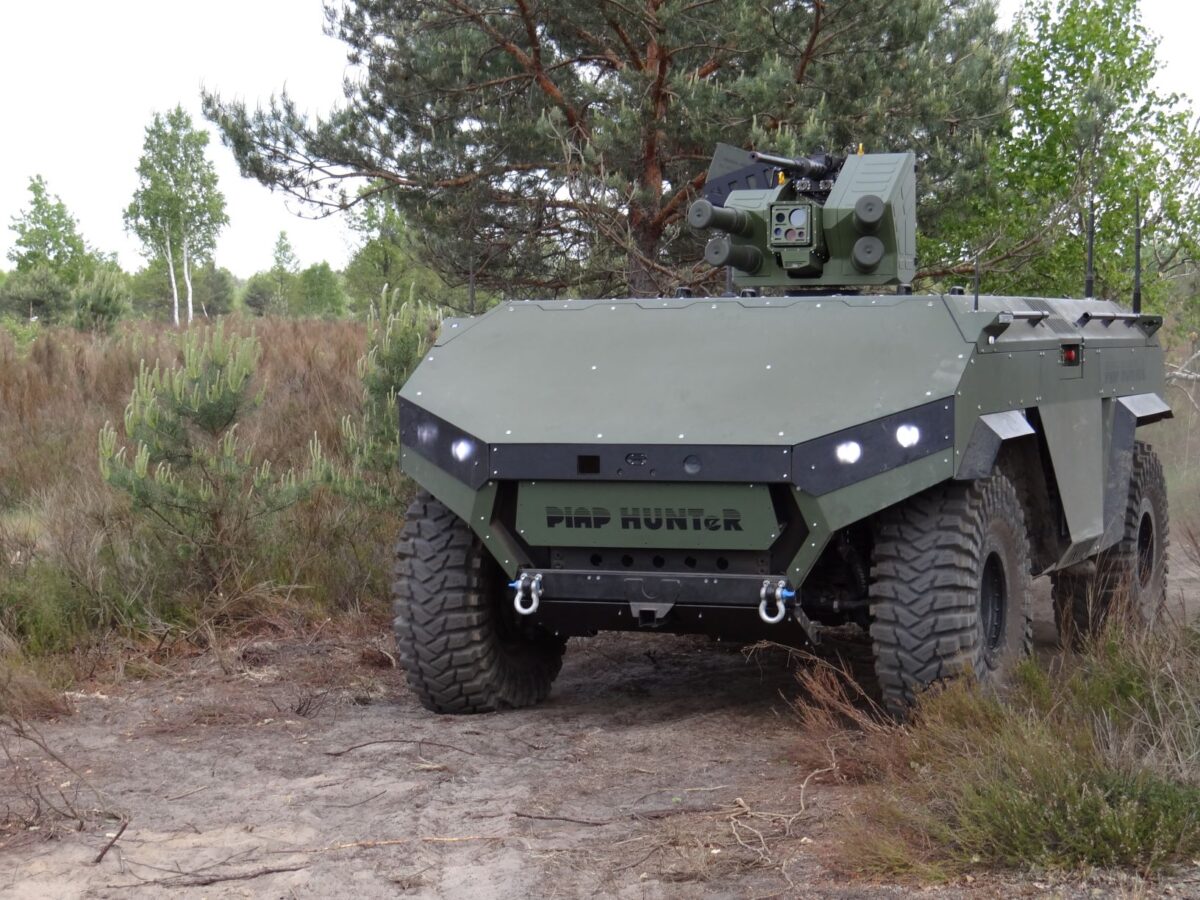
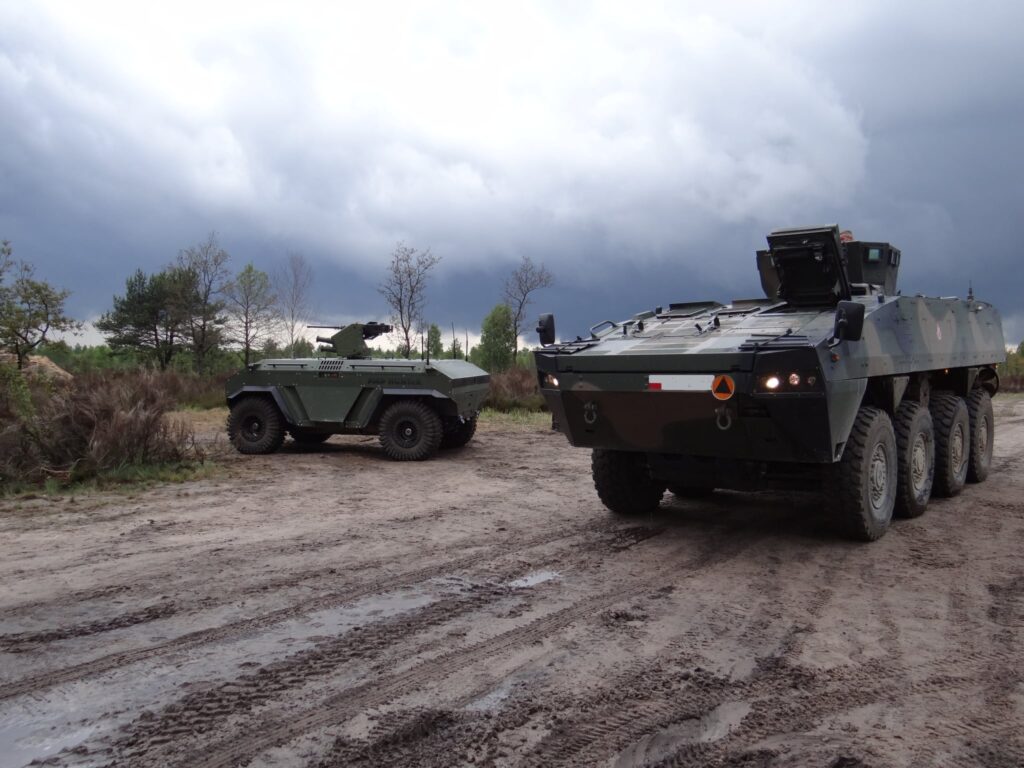
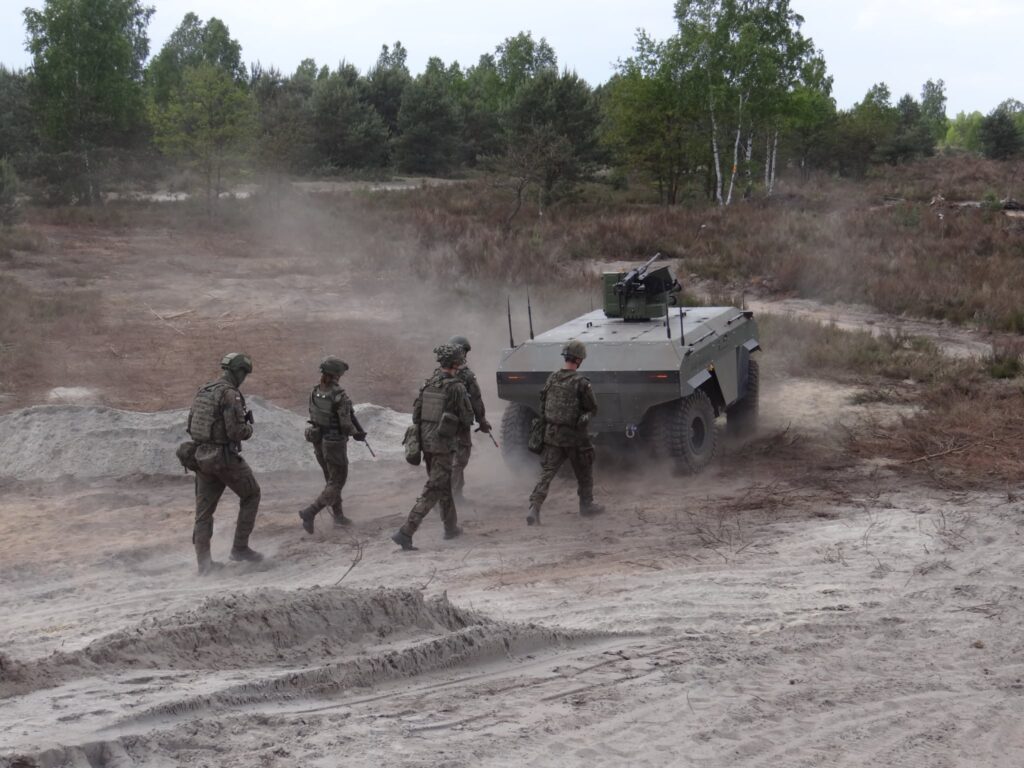
The Institute provides its combat-capable mobile robot PIAP HUNTeR, which will be integrated as a fully-fledged component of the iMUGS2 architecture. This will support practical testing and refinement of common operational standards within a multinational robotic ecosystem. The platform will serve as a reference implementation of European interoperability requirements in both autonomous missions and infantry-support scenarios.

2. Integration of PIAP HUNTeR with a weapons module and the autonomy system developed under iMUGS2

Łukasiewicz – PIAP leads the integration of sensors, control systems, mission-planning functions and autonomous algorithms, linking the HUNTeR platform with weapon-system modules and autonomy solutions developed across the consortium. This work is critical for demonstrating cooperation between unmanned platforms in operational and multi-domain environments.

3. Ensuring modularity, interoperability and compliance with EU
and NATO standards

The Institute contributes to designing the iMUGS2 architecture in line with European and NATO interoperability requirements. A key focus is ensuring compliance with the emerging NATO STANAG 4817, which defines cooperation and tasking of unmanned ground and aerial systems in multi-domain operations. These efforts are essential for ensuring modularity, technical openness and future integration of European armed forces’ manned and unmanned assets.

Project scope and development path

iMUGS2 includes parallel conceptual, operational and technological activities — from system-architecture design, through development of autonomous and communication functions, to integration and preparation of technology demonstrators. The project also addresses electronic resilience, communication security and lifecycle-management efficiency.

Project value

With a total budget of approx. EUR 55 million — nearly EUR 50 million provided through the EDF — iMUGS2 focuses on three strategic areas:

– development and demonstration of unmanned ground systems supporting infantry operations,

– development of operational concepts for unmanned ground and aerial systems to enhance the effectiveness of infantry battalions and multi-domain cooperation,

– creation of open system architectures and lifecycle-management frameworks ensuring interoperability with current and future platforms.

The iMUGS2 consortium

The consortium comprises 29 partners representing the defence industry, SMEs and research organisations. This diversity of expertise enables a comprehensive approach to developing European robotic and autonomous military capabilities.

Members of the consortium: AVL List, Bittium Wireless, Bureau Veritas, Czech Technical University in Prague, Cybernetica, Delft Dynamics, Diehl Defence, dotOcean, Elettronica, Escribano Mechanical & Engineering, FN Herstal, GMV, Huta Stalowa Wola, Insta Advance, Integrated Systems Development, John Cockerill Defense, Kepla, KNDS France, KNDS Germany, Kongsberg Defence & Aerospace, Latvijas Mobilais Telefons, Łukasiewicz – PIAP, Milrem Robotics (project coordinator), Nortal (Talgen Cybersecurity), Norwegian Defence Research Establishment, Royal Military Academy of Belgium, Safran Electronics & Defense, Svensk Konstruktionstjänst, and TNO.

Information contained here reflects only the author’s view and the Commission is not responsible for any use that may be made of the information contained here.

Continue reading “Łukasiewicz – PIAP plays a key role in the new European iMUGS2 project developing interoperable unmanned ground systems”
Łukasiewicz – PIAP Autonomous Systems at the OPEX 2025 Test Range in Italy

European Defence Enters the Era of Autonomy – Łukasiewicz – PIAP Tests Innovations During HEDI OPEX 2025 Campaign

The groundbreaking HEDI OPEX 2025 experimental campaign has kicked off at the CEPOLISPE training ground near Rome, organized by the European Defence Agency. This is the first initiative of its kind in Europe, aimed at accelerating the deployment of autonomous military technologies. Among the participants is Łukasiewicz – PIAP, testing its advanced PIAP MULES system under realistic operational conditions. The campaign runs through the end of July and may set a new course for the future of European armed forces.

Defence innovation is reaching new heights – the HEDI OPEX 2025 experimental campaign officially kicked off on 5 June at the Italian Army’s CEPOLISPE test centre near Rome. This is the first initiative of its kind in Europe, organised by the European Defence Agency (EDA) through the EU Hub for Defence Innovation (HEDI). Its goal is to accelerate the deployment of advanced autonomous technologies within the armed forces of EU Member States.

Starting on 9 June, six leading European technology companies – including the Łukasiewicz Research Network – PIAP institute from Poland – began testing their solutions under realistic operational conditions, side by side with European armed forces. The campaign will run until the end of July and features dynamic field scenarios involving both unmanned ground and aerial systems.

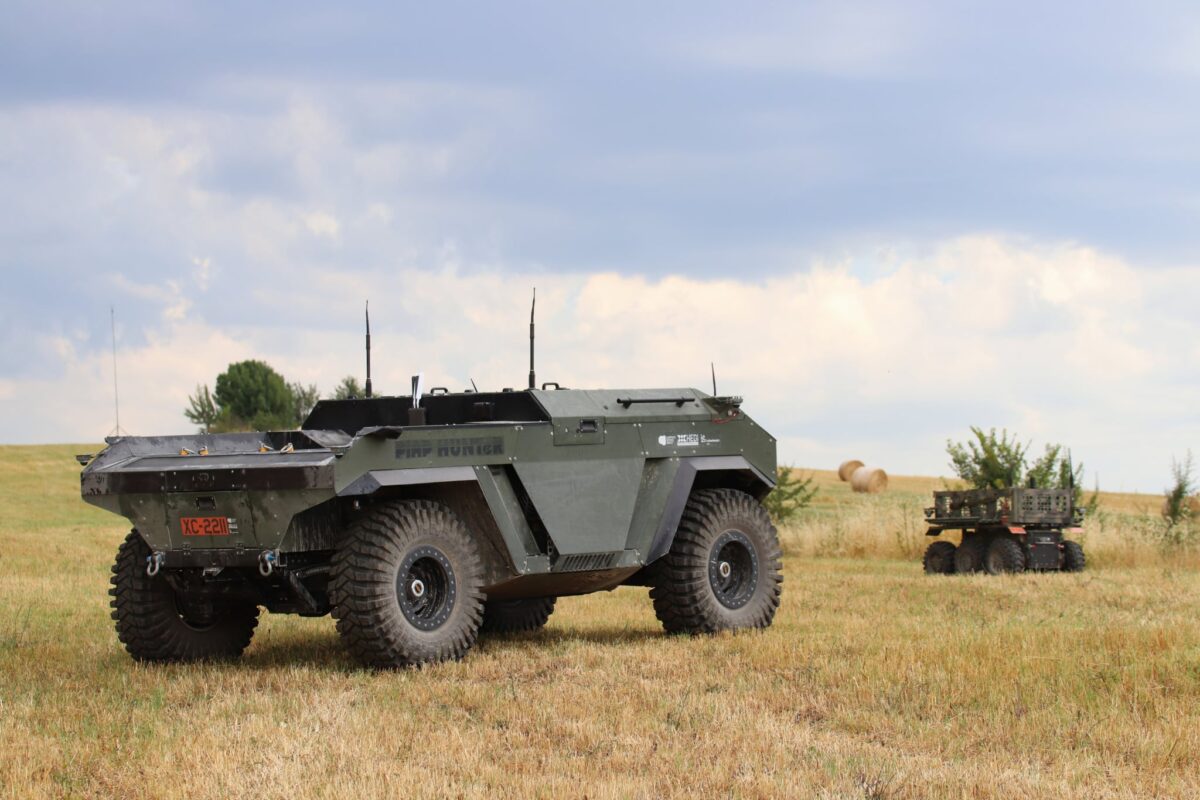
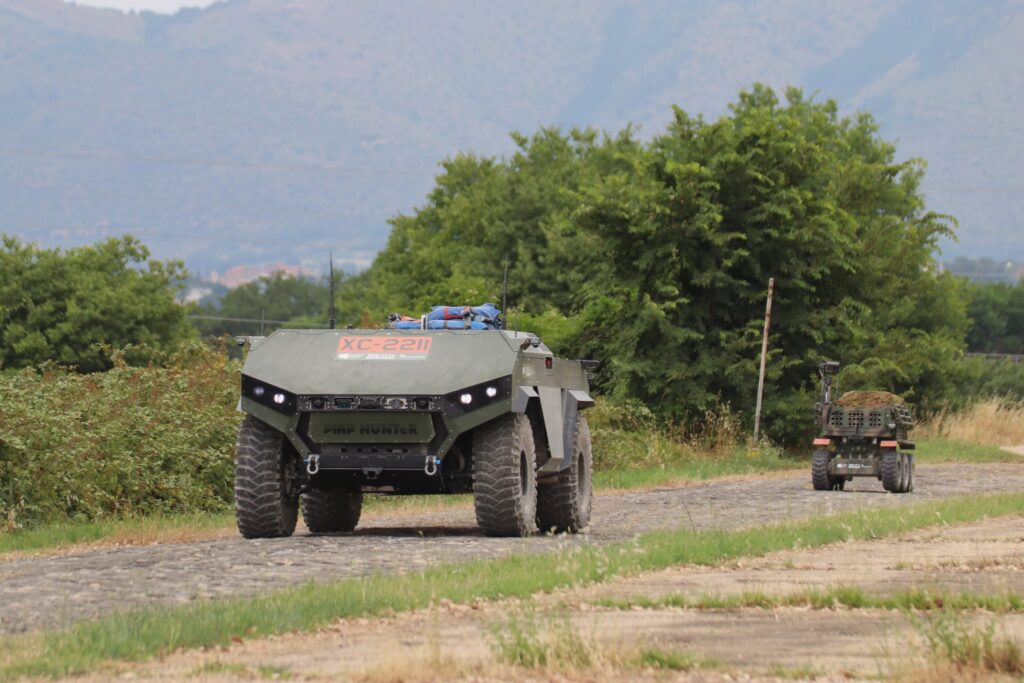
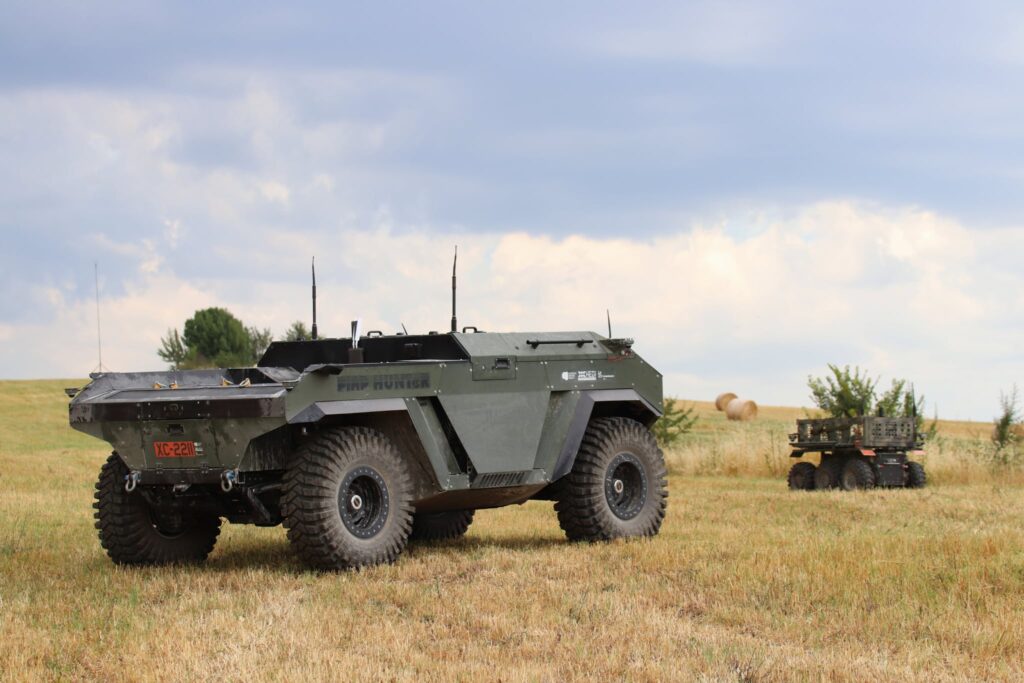
PIAP-na-OPEX-2025-PIAP-HUNTER-i-PIAP-IBIS

Łukasiewicz – PIAP is contributing to OPEX 2025 with its innovative PIAP MULES solution, developed on the basis of its proven mobile platforms, PIAP HUNTeR and PIAP IBIS. The system is tailored for autonomous logistics, CASEVAC, and reconnaissance missions in the demanding context of multi-domain warfare. These systems are equipped with autonomous mobility functions and the ability to exchange data with other unmanned systems and Command & Control (C2) infrastructure via standardised communication interfaces. Such interoperability is essential for modern, integrated military operations.

Our participation in OPEX 2025 confirms the readiness of our technologies to operate in challenging, operational environments. We are proud to be part of this groundbreaking initiative aimed at implementing innovation in European defence in a real and practical way,” emphasised Prof. Piotr Szynkarczyk, PhD Eng., Director of Łukasiewicz – PIAP.

The OPEX campaign is a key element of EDA’s strategy to accelerate the development and adoption of technological solutions across EU armed forces. By bringing together industry, end-users, and research and development environments, HEDI creates a unique space for joint experimentation and the rapid deployment of innovations.

PIAP at the #SharingCyber2024 conference in Rome

The next edition of the #SharingCyber2024 conference ended, to which a delegation from Łukasiewicz – PIAP institute was invited. Photo report from the event in Rome.

On October 29 , the next edition of the #SharingCyber2024 conference ended, to which a delegation from Łukasiewicz – PIAP institute was invited.

The aim of the conference was to define the current state and indicate possible directions and areas of Polish-Italian cooperation in building military capabilities in the cyber domain at the military, scientific, and industrial levels.

The event was an excellent opportunity to recall the institute’s capabilities in the field of military robotics, which also must be resistant to cyber threats.

Continue reading “PIAP at the #SharingCyber2024 conference in Rome”

First trials of DeterMine project under EDF

First trials of DeterMine project #DeterMine funded by the European Defence Fund was held on 23-27 September in Sweden.

Our project #DeterMine funded by the European Defence Fund under EDF-2022-LS-RA-CHALLENGE-DIGIT-HTDP participated in the first field trials of the EDF #HiddenThreatDetection #Challenge that was held on 23-27 September in Sweden.

Continue reading “First trials of DeterMine project under EDF”

EOD robot PIAP PATROL at Future Forces 2024

The Future Forces Forum 2024 (FFF 2024) took place in Prague on October 16-18.

The Czech Republic hosted the 15th edition of the Defence and Security Forum within the FUTURE FORCES FORUM (FFF). The main objective of the event was to support state institutions and organizations in the implementation of political and military plans and commitments, as well as development cooperation within NATO and the EU and with other partner countries.

Continue reading “EOD robot PIAP PATROL at Future Forces 2024”

Polish PIAP HUNTeR Armed UGV at the MSPO fair

We cordially invite you to visit the Łukasiewicz – PIAP stand number D-56, during the International Defense Industry Exhibition MSPO in Targi Kielce.
The third exhibition of Europe, after the fairs in Paris and London, will take place from September 5 to 8, 2023.

Continue reading “Polish PIAP HUNTeR Armed UGV at the MSPO fair”

PIAP HUNTeR with ZMU-03 turret debuts on training grounds – FEX

The unmanned PIAP HUNTeR vehicle equipped with the unmanned AREX ZMU-03 turret made its debut during experimental exercises (FEX) at the training ground in Nowa Dęba.

The unmanned PIAP HUNTeR vehicle equipped with the unmanned AREX ZMU-03 turret made its debut during experimental exercises (FEX) at the training ground in Nowa Dęba.
The armed PIAP HUNTeR (in the reconnaissance variant) made its debut in challenging training ground conditions during the Field Experimentation Exercises (FEX). For the first time, for over a week, soldiers had the opportunity to learn and assess the capabilities of using an armed, remotely operated AREX ZMU-03 module on an unmanned wheeled vehicle in various tactical situations.
The development of the PIAP HUNTeR robot with the ZMU-03 turret is the result of cooperation between two Polish companies: the Łukasiewicz Research Network – Industrial Research Institute for Automation and Measurements PIAP and the Automation and Measurement Equipment Department of AREX (a company within the WB Group).

The Polish combat robot (in the reconnaissance variant) made its debut in challenging training ground conditions during the experimental Field Experimentation Exercises (FEX). For the first time, for over a week, soldiers had the opportunity to learn and assess the capabilities of using an armed unmanned wheeled vehicle in various tactical situations.

PIAP HUNTeR performed exceptionally well. The robot demonstrated high off-road capabilities, surpassing armored vehicles in some situations. It accompanied fast-moving units in a challenging, sandy area. The PIAP HUNTeR with the remote AREX ZMU-03 weapon module was used for threat detection, providing fire support, and deploying smoke screens.

All tasks were carried out in realistic conditions, with the active participation of soldiers and military vehicles belonging to the Polish Armed Forces. The experiences from the FEX exercises can be used for future implementation of unmanned ground vehicles within the battalion of future concept being developed by the General Staff of the Polish Armed Forces.

FEX exercises are an invitation from the Polish Armed Forces to engage in dialogue between military commanders and suppliers of the latest, often futuristic solutions for the military. They also contribute to the improvement of products to better meet the requirements of the modern battlefield.

PIAP HUNTeR unmanned ground veheicle

PIAP HUNTeR is a Polish project of an unmanned ground vehicle. The robot can be used for observation and patrolling of borders, military grounds, or urban areas, as well as providing fire support to light infantry or protecting mechanized military columns. PIAP HUNTeR is equipped with daytime and thermal cameras, as well as a radio communication system.

The robot has a weight of over four tons and is nearly five meters long. The vehicle has a hybrid drive that includes a power generator and electric traction motors. The power system used allows for extended operation of the robot, and enables silent movement in electric-only mode.

PIAP HUNTeR reaches a maximum speed of over 50 km/h. The platform is equipped with six high-resolution cameras. The optic systems used in the unmanned AREX ZMU-03 turret can additionally help the operator control the vehicle or detect enemies.
The one-meter-diameter wheels, combined with the 4×4 drive system, provide the robotic platform with high off-road capability. This is further enhanced by the differential lock mechanisms and two steering axles implemented by the Łukasiewicz-PIAP engineers.

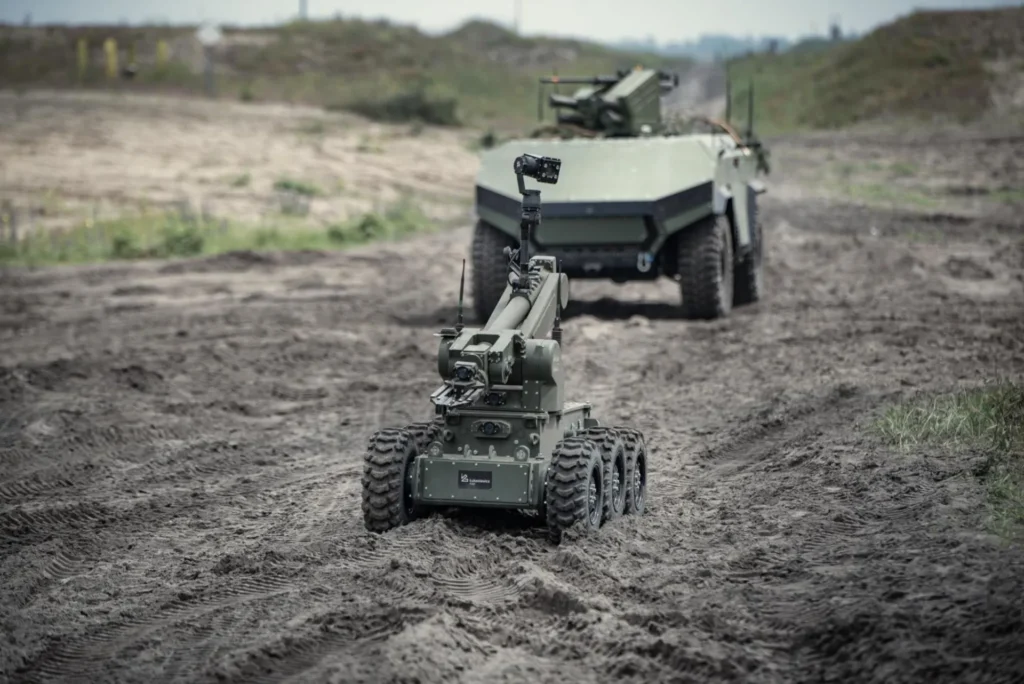
During the exercises, PIAP HUNTeR was presented in tandem with the 320-kilogram heavy EOD robot PIAP IBIS. The smaller system can serve as observation support with its daytime-nighttime camera and thermal camera head. The robots mutually exchange radio signals, extending the operational range of the vehicles.
During the Field Experimentation Exercises in Nowa Dęba, the PIAP HUNTeR robot was presented in a reconnaissance platform configuration equipped with an unmanned ZMU-03 turret. The armament of the module included a 12.7 mm heavy machine gun and smoke grenade launchers. Optionally, the turret can also be equipped with a small unmanned aerial vehicle, such as the X-FRONTER.

The lightweight turret system ZMU-03 was developed by the Automation and Measurement Equipment Department of AREX (a company within the WB Group). In addition to firearms, it has an observation head with daytime and thermal cameras, as well as a laser rangefinder. This armament module can be installed on various wheeled vehicles, however, the FEX was the first time it was integrated with an unmanned ground platform.

The ZMU-03 is equipped with a weapon and observation head stabilization system. Thanks to automatic detection and tracking of selected objects, the armament module can precisely observe targets and engage in accurate fire even when the carrier is moving in challenging terrain. The turret can be controlled from an operator’s station on the vehicle or remotely using a portable console.

Control of the ZMU-03 using the U-Gate Personal Command and Observation System developed by the WB Group was also demonstrated for the first time during the FEX. It was shown to the soldiers that the operator, using augmented reality technology, could not only observe but also select targets and engage in fire from a remote weapon module.

The armed PIAP HUNTeR was presented in a version that allowed soldiers to control the platform in conditions of radio signal jamming. A second control console can be installed directly on the vehicle. This design is intended to maintain control in crisis situations.PIAP HUNTeR armed with the ZMU-03 can meet the military’s expectations for armed unmanned ground vehicles. The robot can be offered by the manufacturer in both fully remotely operated and semi-autonomous configurations. The latter assists and relieves the operator by using terrain recognition systems based on installed lidars. In this mode, the HUNTeR can follow soldiers or move along a specified route.

Defence 24 Day 2023

Defence24 Day is the largest conference in Central and Eastern Europe devoted to defence and security issues. This is the leading event for the defence sector and industries related to the security of citizens, enterprises and public administration.

Continue reading “Defence 24 Day 2023”

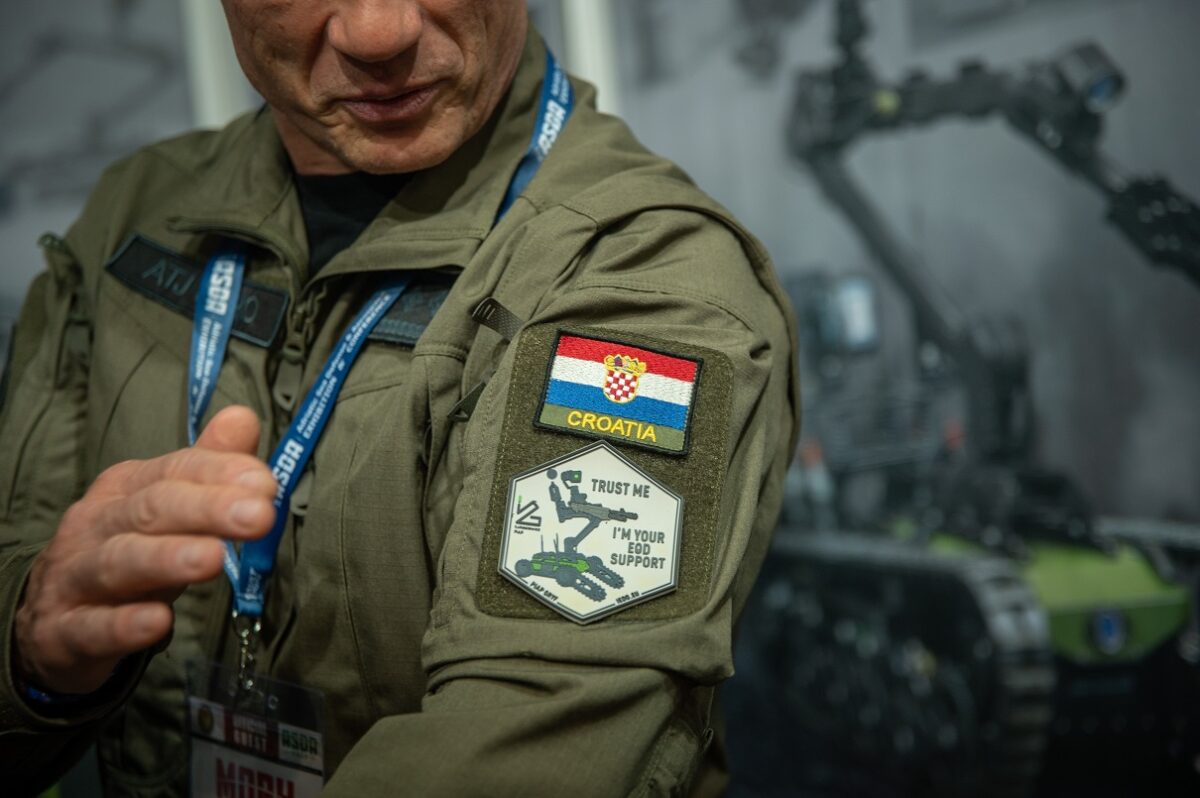
Łukasiewicz-PIAP at the ASDA 2023 Croatia

The Łukasiewicz Research Network – Industrial Institute for Automation and Measurements PIAP at the ASDA 2023

Continue reading “Łukasiewicz-PIAP at the ASDA 2023 Croatia”

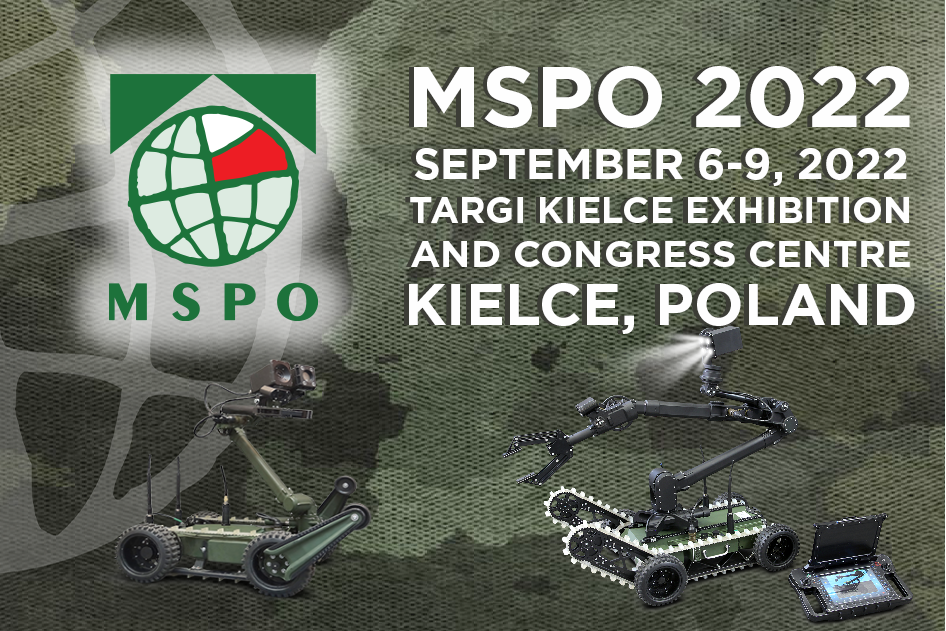
Łukasiewicz-PIAP at the MSPO 2022

The Łukasiewicz Research Network – Industrial Institute for Automation and Measurements PIAP will present the latest offer of robotic systems at the International Defense Industry Exhibition MSPO

Continue reading “Łukasiewicz-PIAP at the MSPO 2022”